Transfer Switch vs Interlock vs Extension Cords: Safe Ways to Connect Backup Power
Four safe ways to get backup power to your appliances, from a $20 cord to an electrician-installed panel, and the one way that can kill a line worker.
We may earn a commission when you buy through links on this page, at no extra cost to you. This does not change which products we cover. How we make money.
Never connect a power station or a generator to a wall outlet. Anker’s own guidance is blunt: “Never plug it into a standard wall outlet.” Backfeeding through an outlet can send power out onto the utility line, where it can electrocute a line worker, and it can overheat the wiring in your walls. There are four safe ways to do it instead.
Why a wall outlet is off limits
Your house wiring connects to the grid through the main breaker. If you push power into an outlet while the main is on, that power flows back through your meter and out to the street. Utility transformers can step it up to thousands of volts on the line a crew is repairing. When the grid comes back, it can also hit your generator or station at full force. The CPSC portable generator guidance warns against backfeeding for these reasons.
Option 1: extension cords to each appliance
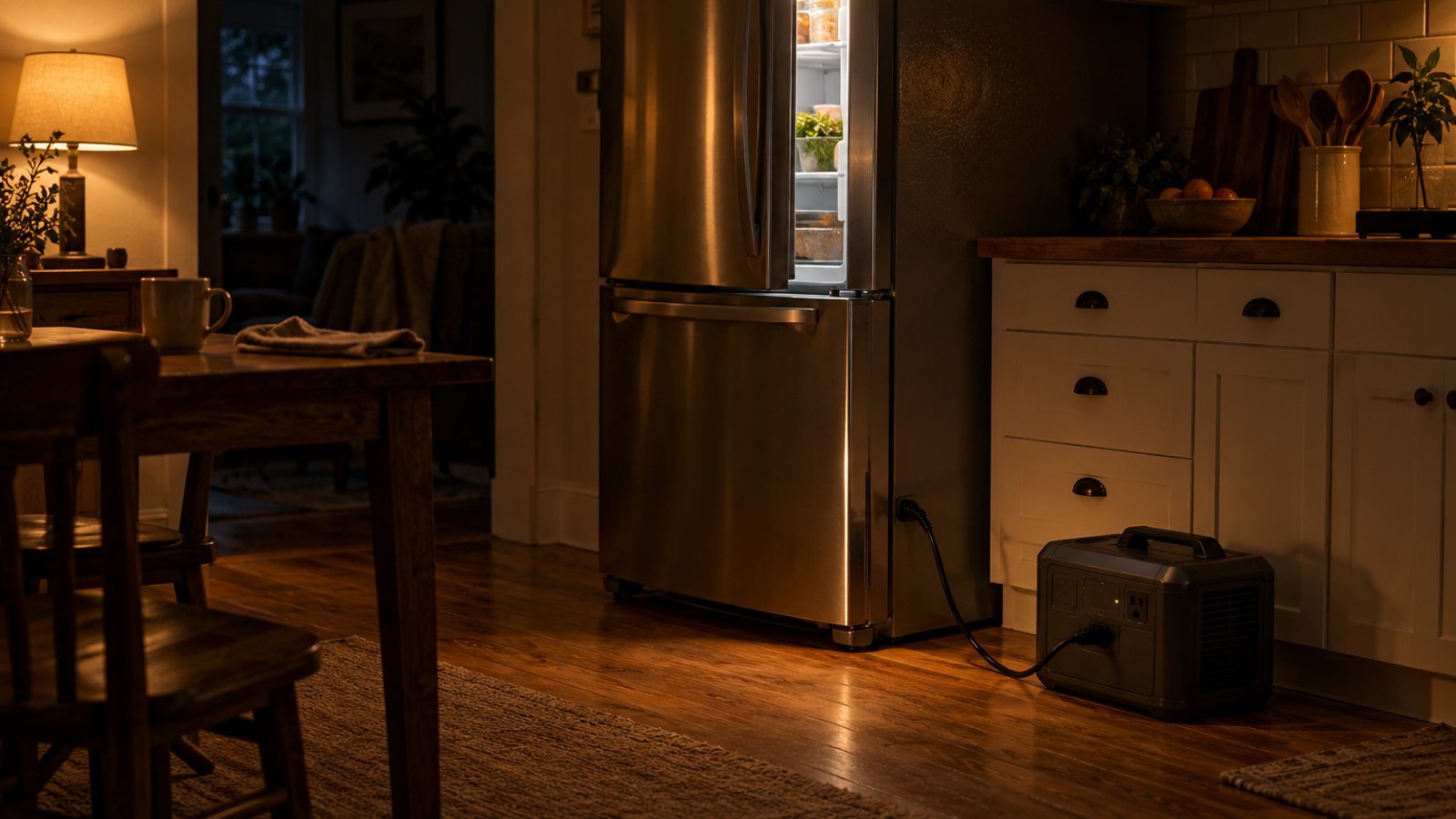
Plug the fridge, router and lamps into the station, or into heavy-duty extension cords run from it. Nothing touches the house wiring.
- Good for: fridges, freezers, routers, CPAPs, lamps, phone chargers.
- Can’t do: hard-wired loads such as a furnace blower, a well pump or ceiling lights.
- Tip: use cords rated for the load, keep runs short, and don’t daisy-chain power strips.
For most renters and apartment owners, this is the whole answer.
Option 2: a manual transfer switch
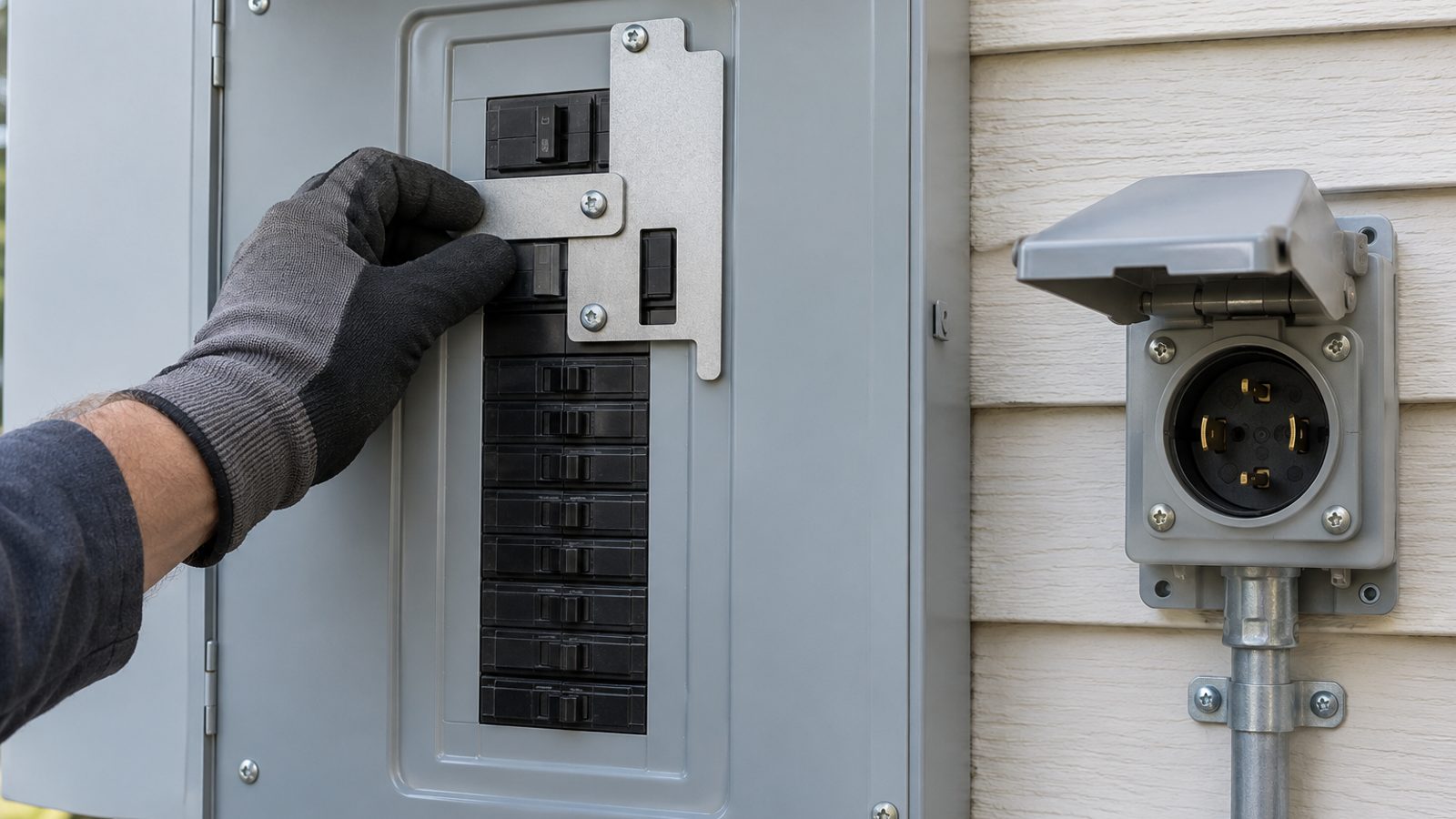
An electrician wires a small subpanel or switch next to your main panel and moves a handful of critical circuits onto it, such as the furnace, the fridge, a few lights and the sump pump. During an outage, you plug the station or generator into an inlet and flip each circuit from “line” to “generator”. The switch makes it impossible for a circuit to draw from both at once.
- Good for: a fixed set of essential circuits, including hard-wired ones.
- Watch for: the inlet rating and plug type must match your station. The Anker SOLIX F3800 Plus and the EcoFlow DELTA Pro 3 both list 240V output for transfer-switch connections.
Option 3: interlock kit and inlet box
An interlock is a sliding plate on your main panel. It lets you turn on a backfeed breaker only when the main breaker is off. An inlet box on the outside wall gives you a safe socket for the power cord. During an outage, you switch off the main, turn on the backfeed breaker, then choose which circuits to run at the panel.
- Good for: flexibility, because you pick circuits at the panel on the day.
- Watch for: your total load. Nothing stops you from switching on more circuits than the station can carry, so turn off big loads first. The interlock kit must be listed for your panel model.
Option 4: a maker’s home panel
Some brands sell a dedicated panel that pairs with their stations. Anker sells the SOLIX Home Power Panel for the F3800 Plus, and EcoFlow sells a Smart Home Panel for its DELTA Pro line. These panels feed chosen circuits from the battery and switch over when the grid drops, so you don’t have to walk out to the garage. Check the maker’s page for the features on your exact model.
- Good for: automatic, whole-circuit backup with app control.
- Watch for: these panels lock you into one brand, and they still need a licensed installer.
Permits, electricians and cost
Options 2 to 4 involve your panel, so plan for a permit, an inspection and a licensed electrician. We don’t publish cost ranges here, because we haven’t found a reliable, current source for them, and prices vary a lot by region and panel. Get at least two written quotes that list the switch or kit, the inlet, the permit and the labor.
Which option fits your plan?
| If you need… | Choose |
|---|---|
| Fridge, router and lights only | Extension cords |
| A fixed set of hard-wired circuits | Manual transfer switch |
| Pick circuits on the day, lower parts count | Interlock and inlet box |
| Automatic switchover with app control | Maker home panel |
Work out which circuits and how many hours first with our sizing guide, then compare stations in best portable power stations for home backup.
Frequently asked questions
Can I install a transfer switch myself?
In most US jurisdictions, work inside a breaker panel needs a permit and an inspection, and many require a licensed electrician. Check with your local building department before you start. Plugging appliances into the station with extension cords needs no installation at all.
Interlock vs transfer switch: which is safer?
Both prevent backfeeding when installed and used correctly. A transfer switch feeds a set of pre-wired circuits. An interlock is a plate that stops the main breaker and the backup breaker from being on together, so you choose circuits at the panel. Which one fits depends on your panel and local code.
Does a power station need a neutral-bonded setup?
It depends on the station and on the switch. Some transfer switches and inlets expect a floating-neutral source, others a bonded one. Follow the station maker manual and have an electrician confirm the setup.
Is it legal to backfeed through a dryer outlet or wall outlet?
No. A so-called suicide cord with two male plugs is dangerous, violates electrical code, and can energize the utility line. Use one of the four options in this guide instead.