Portable Power Station vs Generator: How to Run the 10-Year Numbers
Batteries now hold their own against generators for short outages. For multi-day outages, refuelable runtime still wins, and many owners run both.
We may earn a commission when you buy through links on this page, at no extra cost to you. This does not change which products we cover. How we make money.
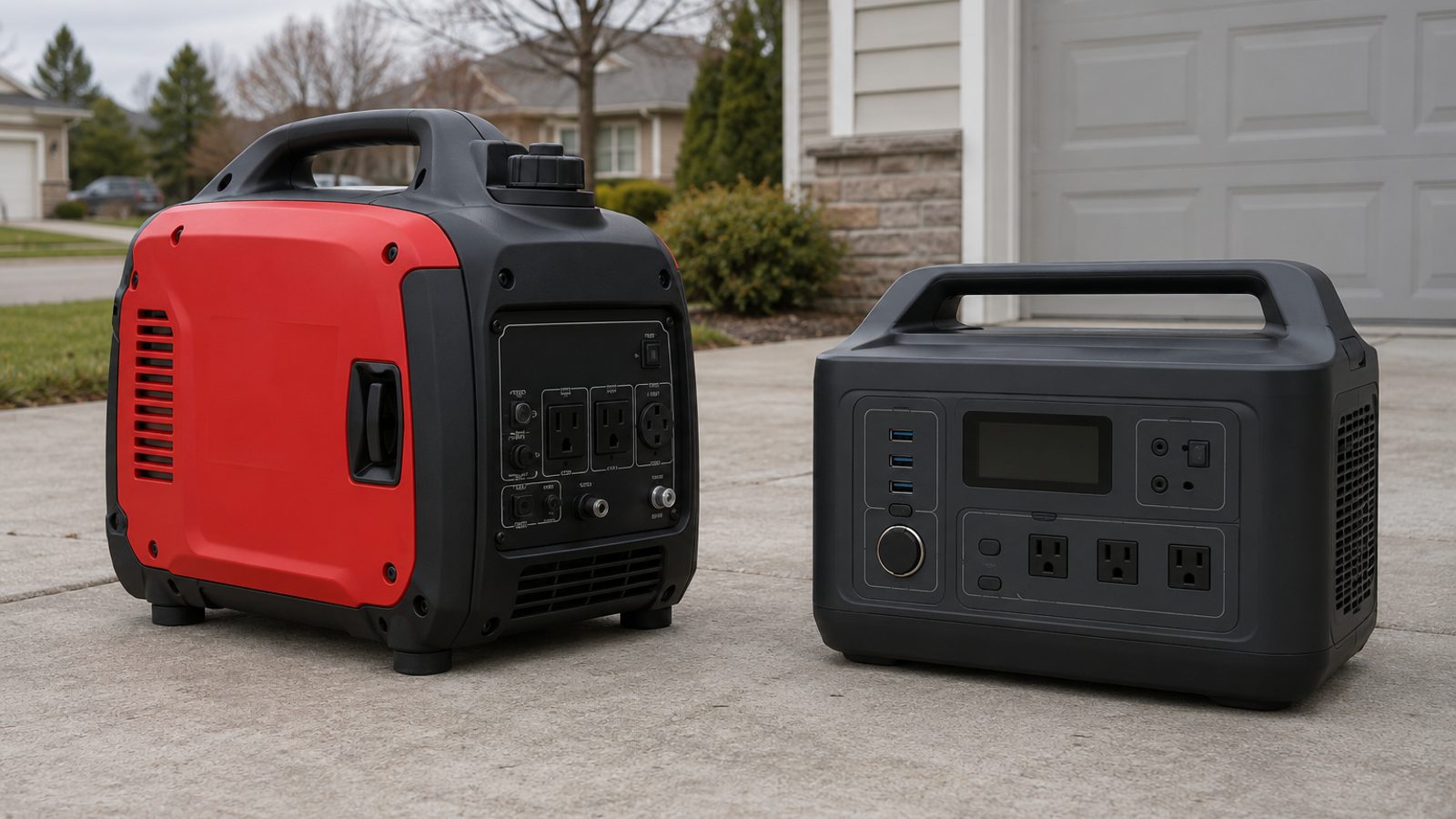
For outages measured in hours, a portable power station wins on almost everything except purchase price: it runs indoors, makes almost no noise, and sits in a closet for months without upkeep. For outages measured in days, a generator’s refuelable runtime still wins. The setup that keeps coming up among owners is both: a battery for quiet nights, solar for sunny days, and a small inverter generator for the gaps.
A recent r/Frugal thread with more than 250 upvotes put it in its title: portable batteries are “surprisingly competitive with generators now”. The replies show where the argument gets messy.
Upfront cost, fuel and upkeep: a method, not a verdict
We won’t hand you a 10-year total, because it hinges on prices that change every week and on how often your power fails. Here is the worksheet. Put in your own quotes.
| Line item | Generator | Battery power station |
|---|---|---|
| Purchase | Your quote | Your quote |
| Fuel per outage hour | Fuel use from the spec sheet × local fuel price | Recharge from grid or solar (small) |
| Upkeep per year | Oil, spark plug, fuel stabilizer, test runs | Top-up charge every few months |
| Expected life | Years of use (see below) | Rated cycles ÷ cycles you use per year |
| Extras | Transfer switch or interlock, fuel cans | Transfer switch, panel kit, solar panels |
10-year cost = purchase + (10 × yearly upkeep) + (outage hours over 10 years × cost per hour) + replacement if life is under 10 years.
Run it twice: once for a quiet decade, once for a decade with a bad storm season every couple of years. If the answers swap places, the hybrid setup below deserves a look.
Lifespan: generators last longer than the thread assumed
The r/Frugal model assumed a 5 to 6 year generator life. The most-upvoted reply pushed back: “the assumption about a 5-6 yr lifetime for a portable generator is very conservative… use Stabil.” (u/DrSilverthorn). A generator that gets fresh oil, stabilized fuel and a monthly test run can serve a lot longer. One that sits with old fuel in the carburetor may fail on the first stormy night.
Battery life is easier to count. Makers rate cycles, and a home-backup battery cycles only when the power fails or when you test it. EcoFlow rates the DELTA Pro 3 for 4,000 cycles to 80% capacity. Anker rates the SOLIX F3800 Plus for 3,000+ cycles and gives it a 5-year warranty. For most households, age and the warranty will run out before the cycles do.
Noise, indoor use and carbon monoxide
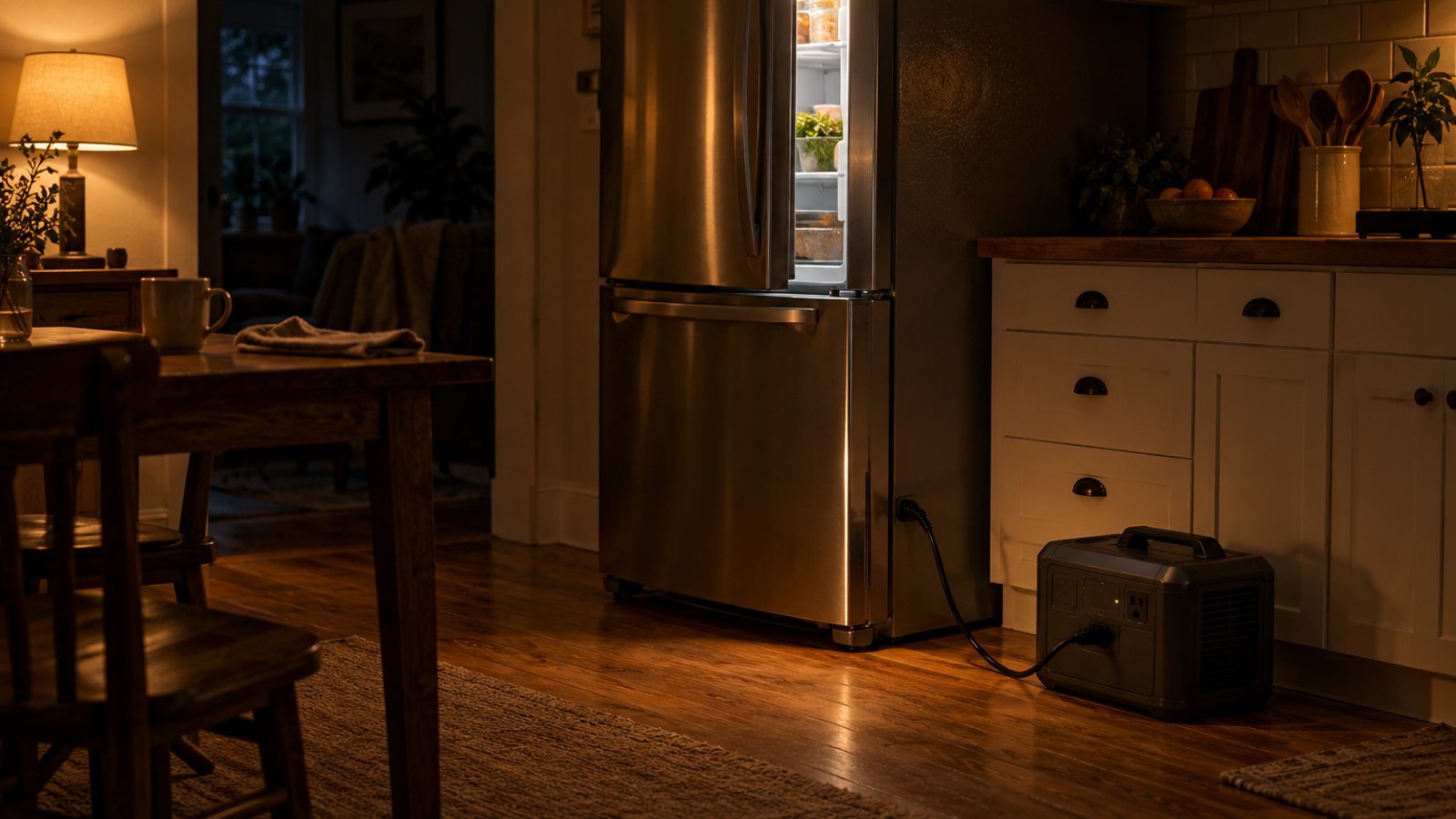
A battery station can sit next to the fridge or the bed. It has fans that spin up under heavy load, and it gives off no exhaust. That matters for apartments, for CPAP users and for anyone who can’t leave a generator running safely outside overnight. Fuel storage also matters: gasoline goes stale, and many HOAs and landlords restrict stored fuel.
Runtime limits: the cloudy-night problem
A battery holds a fixed amount of energy. Solar refills it only when the sun cooperates. One owner who went through Hurricane Helene wrote: “I had only the panels and battery at first, but couldn’t make it through the night some nights after a cloudy day.” (u/briko3, same thread).
To size the battery for your nights, use our sizing guide. For a fridge on its own, see how long a power station runs a fridge.
The hybrid setup
Pair a LiFePO4 station with solar and a small inverter generator, and each covers the other’s weak spot:
- The battery runs the fridge, router and lights all night in silence, and switches over on its own in UPS mode.
- Solar refills it on sunny days with no fuel.
- The generator runs a few hours on cloudy days to refill the battery, then shuts off.
Most stations recharge from a generator through their AC input. Anker lists 1,800W of AC charging for the SOLIX F3800 Plus, so a generator in that range refills it at full speed. Check the maker’s manual for the generator types it supports.
Which fits your household?
| Your situation | Best fit |
|---|---|
| Apartment, outages under a day | Battery power station |
| CPAP or medical device at night | Battery with UPS mode |
| Suburban home, storms once or twice a year | Battery plus solar, or hybrid |
| Rural home with a 240V well pump, multi-day outages | Generator or hybrid with a 240V battery |
| No safe outdoor spot for a generator | Battery plus solar |
Whichever way you go, connect it safely. Our guide to transfer switches, interlocks and extension cords covers the options.
Frequently asked questions
Which is cheaper over 10 years, a battery or a generator?
It depends on how often you lose power and for how long. A generator usually costs less up front and keeps running as long as you refuel it. A battery has no fuel or oil costs. Fill in the worksheet in this article with your own prices to compare.
Can a battery replace a generator for a 3-day outage?
Only with a large battery and a way to recharge it. Solar helps on sunny days. Owners who went through long outages report running short at night after cloudy days, which is why many add a small inverter generator.
Is a power station safe to use indoors?
Yes. A battery power station burns no fuel and produces no carbon monoxide. A gas generator must run outdoors, away from windows and doors, per CPSC guidance.
How many cycles does a LiFePO4 power station last?
Makers rate the LFP units in our guides for 3,000 to 4,000 cycles. Anker lists 3,000+ for the SOLIX F3800 Plus, and EcoFlow lists 4,000 cycles to 80% for the DELTA Pro 3.